
Fukunaga Lab
Department of Biomedical Science & Engineering
Faculty of Health Sciences
Hokkaido University


Research
Our goal is to uncover the biological mechanisms that shape the effects of ionizing radiation on reproductive function and the health of subsequent generations. We investigate how the spatial distribution and timing of exposure influence tissue injury, recovery, and mitochondrial genome regulation. By connecting fundamental radiobiology with clinical and public health perspectives, we aim to translate these insights into strategies that preserve healthy tissues and reproductive function, improve the safety of medical radiation use, and strengthen the scientific basis for radiological protection.
Spatial Dose Distribution and Tissue Reactions
We investigate how the spatial distribution of radiation dose influences tissue injury and recovery, with a particular focus on spermatogenesis and fertility. By comparing uniform and spatially fractionated irradiation, we seek to identify the biological processes that allow tissue function to be preserved or restored.
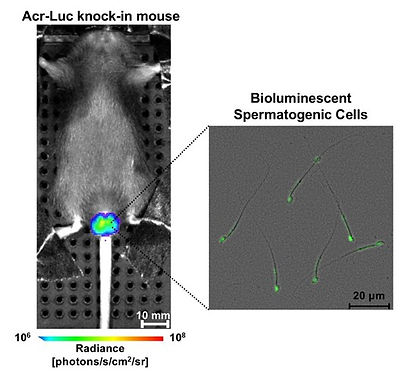
Our approaches include microbeam irradiation, ex vivo testis culture, radiation dosimetry, and longitudinal bioluminescence imaging using the Acr-Luc knock-in mouse model. Combining these experiments with mathematical modelling, we aim to relate dose distributions to the dynamics of spermatogenic injury and recovery. Our long-term goal is to provide a biological basis for fertility preservation and normal tissue protection during radiotherapy.
Mitochondrial Genome Responses Across Generations
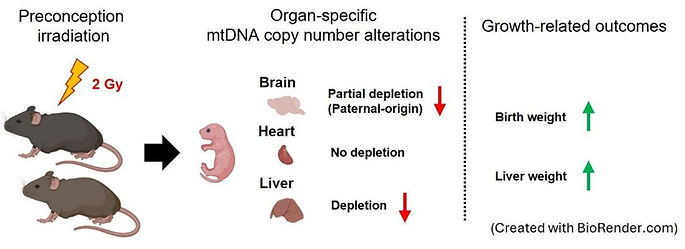
We investigate how ionizing radiation influences mitochondrial DNA copy number and genome regulation, focusing on responses in exposed individuals and their offspring. Our animal studies examine parental exposure before conception and exposure during fetal development as distinct settings, with attention to exposure timing, sex, and differences between tissues.
We seek to understand how these mitochondrial responses relate to tissue development and metabolic function. Complementary human cohort studies examine associations between mitochondrial DNA copy number, maternal factors, and perinatal outcomes. Together, these approaches help us explore the biological significance of mitochondrial genome regulation across generations. Our goal is to clarify how dynamic mitochondrial responses can inform assessments of reproductive and intergenerational effects alongside inherited nuclear DNA mutations.
Radiological Protection and Environmental and Occupational Health
Our research connects experimental radiobiology with radiological protection and environmental and occupational health. Drawing on clinical and public health experience following the Fukushima Daiichi nuclear accident, we examine how exposure conditions and biological evidence can inform the protection of individuals and populations.
We study radiation exposure in occupational and environmental settings and consider how emerging evidence on reproductive and intergenerational effects should be evaluated within radiological protection. We also examine how scientific evidence can be communicated to support informed decisions about radiation and health. Our aim is to strengthen the connection between biological understanding, exposure assessment, and practical measures to protect human health.
.
